Background Briefing has a new home at BackgroundBriefing.org.
Please visit and bookmark the new site. You can search show archives here.

Background Briefing has a new home at BackgroundBriefing.org.
Please visit and bookmark the new site. You can search show archives here.
 Share this
|
|
LISTEN TO FULL PROGRAM | |
|
|
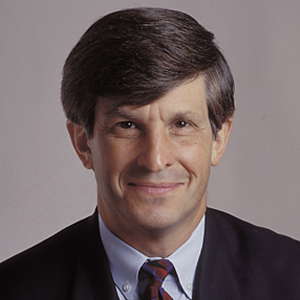
We begin with an analysis of the post-Super Tuesday electoral landscape ahead for Donald Trump, the increasingly likely Republican presidential candidate and Hillary Clinton, the Democratic front-runner. Allan Lichtman, a political historian at American University and author of “White Protestant Nation: The Rise of the American Conservative Movement”, joins us to discuss this wildly unpredictable election year and how it relates to his book “The Keys to the White House: A Surefire Way to Predicting the Next President”, Allan Lichtman’s predicting system that has correctly predicted the outcomes of all U.S. presidential elections since 1984. |
 |
|
|
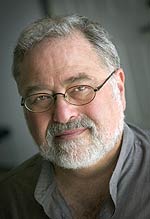
Then George Lakoff a Professor of Cognitive Science and Linguistics at U.C. Berkeley joins us to discuss his work in identifying the authoritarian patriarchal strain in Republican politics in contrast to the yielding matriarchal nature of Democratic politics and how his theories are coming to life with the emergence of a likely Donald Trump versus Hillary Clinton presidential race in this election year. We examine why the Democrats continue to underestimate Trump and how they might be able to blunt his momentum. |
|
|
|
The finally we explore some historical comparisons to a possibly divided Republican Party heading into the 2016 election and the election of 1860 when the country was divided over slavery with Abraham Lincoln’s Democratic opponents splitting into three parties thus ensuring the election of the antislavery Republican candidate. David Reynolds, a distinguished professor at the City University of New York Graduate Center and author of “Lincoln’s Selected Writings” joins us to discuss this and other historical examples of divisive and vitriolic election campaigns. |
Taking listeners deep into the underlying issues and forces that shape our world.
Listen Live on KPFK FM-90.7 - Los Angeles (98.7 FM Santa Barbara, 99.5 FM China Lake, 93.7 FM San Diego)
Listen on Itunes
LA: Background Briefing Monday-Thursday 5pm-6pm and Sundays 11am-12pm
NY: on WBAI 99.5 FM Monday-Friday 5am-6am and rebroadcast at 10am
Also heard on:




 RSS Latest Radio Programs
 Pacifica App